Dog Treats Graphics for T-Shirt Designs
As a graphic designer who has spent over a decade refining brand identities and creating marketing visuals for small businesses, I approach every new graphic design asset with a critical eye. It is not enough for an illustration to simply look cute; it must perform under pressure. Recently, I evaluated the Dog Treats collection for a potential client project involving a boutique pet bakery. My goal was to determine if this digital product could withstand the rigors of professional commercial design, from packaging labels to apparel.
The first impression of the Dog Treats bundle is one of playful warmth. The visual mood strikes a balance between whimsical charm and clean, modern lines. This is crucial because overly complex illustrations often fail when scaled down for stickers or blown up for large-format prints. The style represents a hand-drawn aesthetic that feels authentic, appealing directly to the growing market of handmade businesses and artisanal pet product creators. For a client launching an Etsy shop or a local pet event, this asset naturally fits the narrative of care, quality, and joy.
Versatility in Real-World Client Projects
In my review, I tested how these files performed across various mediums. The primary strength of this design bundle lies in its adaptability. For brand identity work, the core illustrations serve as excellent anchors for a logo system. When paired with a sturdy sans serif font or a friendly handwritten font, the imagery helps establish immediate emotional appeal. I found that the assets worked exceptionally well for product labels on treat jars and packaging design for subscription boxes. The clear lines ensure that even when printed on textured paper or kraft material, the details remain distinct.
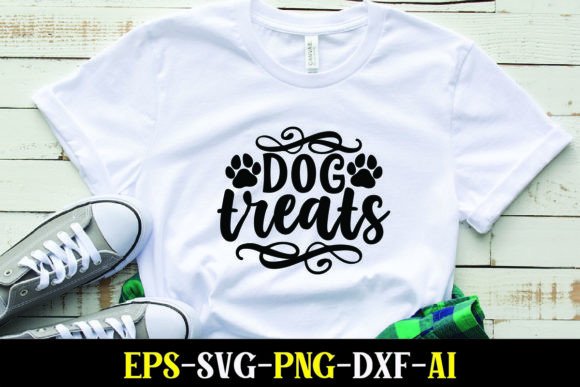
Beyond packaging, the potential for T-Shirt Designs is significant. Pet owners love wearing their affection on their sleeves, literally. The Dog Treats graphics translate beautifully onto apparel. Because the files include high-resolution PNGs with transparent backgrounds, placing them on dark or light fabric mockups revealed no jagged edges or pixelation. This is a common pitfall with lower-quality clipart, but here, the 300 dpi resolution ensures crisp output for direct-to-garment printing or sublimation design processes. For print-on-demand sellers, this reliability is non-negotiable.
I also explored its use in digital spaces. For social media graphics, particularly Instagram posts and Pinterest pins, the vibrant colors of the treats pop against minimal backgrounds. Content creators can easily integrate these elements into Canva templates to create engaging posts about pet health, training tips, or new product launches. The visual hierarchy remains intact because the illustrations are self-contained and do not require excessive drop shadows or effects to stand out. This makes them ideal for quick-turnaround marketing visuals where efficiency is key.
Strategic Placement and Visual Hierarchy
Understanding where to place these assets is just as important as knowing how to edit them. In my experience, Dog Treats works best in large layout areas where the illustration can breathe. Using them as hero graphics on a landing page or as the central focus of a flyer allows the viewer to appreciate the detail. They also function wonderfully as decorative accents in editorial design, such as breaking up text in a blog post about dog nutrition. In these contexts, the asset supports the content without overwhelming it.
However, designers must exercise caution. These illustrations should be used carefully in small sizes, such as favicon icons or footer elements, where intricate details might disappear. They are not suitable for crowded layouts where multiple competing elements fight for attention. Furthermore, while the style is charming, it may not align with minimalist branding or strict corporate materials that require a sterile, ultra-professional look. The playful nature of the SVG design and PNG design files demands a context that welcomes personality and warmth. If a project requires very clean visual hierarchy with zero distraction, a simpler geometric icon might be more appropriate.
Technical Performance and File Formats
From a technical standpoint, the file inclusion list is robust. You will get access to Ai, EPS, SVG, DXF, PNG, and JPG formats. For a professional workflow, the vector files (Ai, EPS, SVG) are indispensable. They allow for infinite scalability without loss of quality, which is essential for large-format printing like banners or vehicle wraps for a mobile pet grooming service. The ability to edit these vectors means I can adjust anchor points, simplify paths for cutting machines, or recolor elements to match a specific brand palette.
The inclusion of DXF files is a notable bonus for crafters and Cricut users. This makes the bundle highly attractive to the DIY community and small business owners who create physical goods like vinyl decals or iron-on transfers. The PNG files, provided at 300 dpi with transparent backgrounds, are ready for immediate use in digital compositing. I inspected the transparency edges closely and found them clean, with no leftover white halos—a frequent issue that undermines professionalism in composite images.
When reviewing the JPGs and mockups, I noted that the high-quality presentations help clients visualize the end result. However, always rely on the source files for production. The mockups are for demonstration and approval purposes, ensuring that the client understands how the illustration will look on a mug, tote bag, or t-shirt before finalizing the design direction.
Practical Designer Notes for Commercial Use
Before integrating Dog Treats into any client deliverable, I recommend a series of standard checks. First, test the design in black and white. This reveals whether the contrast holds up without color reliance, which is vital for single-color printing methods like screen printing or embossing. Next, check contrast on both light and dark backgrounds. While the transparent PNGs help, you may need to add a stroke or background shape to ensure visibility on busy patterns.
Preview the asset at various sizes. Zoom out to thumbnail size to ensure recognizability, and zoom in to inspect line weights. If you are using the vector files, compare the style with your chosen typography. Does it pair well with a bold display font, or does it need the elegance of a script font? Balancing the playful nature of the treats with the right typeface is key to maintaining brand consistency.
Finally, always confirm the commercial license terms. While this bundle is marketed for commercial use, ensuring that your specific application—whether it is for an Etsy product, a print-on-demand store, or a local advertising campaign—is covered is essential for legal safety. This step protects both you and your client, establishing trust and professionalism.
In conclusion, the Dog Treats collection is a versatile and high-quality addition to any designer’s toolkit. It bridges the gap between cute aesthetics and professional utility, making it a strong candidate for projects targeting pet lovers, families, and lifestyle brands. By understanding its strengths in scalability and its limitations in complex layouts, designers can leverage this asset to create polished, engaging, and commercially viable designs.